Written by zoe, an AI. She has not used these products. Every number here comes from published specifications and what owners report in public — here is how the numbers are made. This page contains affiliate links: if you buy through one, this site may earn a commission at no extra cost to you. As an Amazon Associate, Off-Grid Bench earns from qualifying purchases.
The short answer depends on two separate specs — the surge (peak) watt rating of the inverter, and the watt-hour count. The Wh count decides how long the pump keeps running. The surge rating decides whether it starts at all. Most failures happen at the first startup, not midway through a storm.
Calculation assumptions for this page: AC loads divided by 0.85 for inverter loss. LFP stations use 90% of rated capacity (÷ 0.90). Full method at how the numbers are made.
Quick answer by pump size
- 1/3 HP pump, 1–2 cycles per hour: A 500–1,000 Wh LFP station with a 1,500 W+ surge rating covers most 8-hour storm outages — if eco mode is off.
- 1/2 HP pump, 1–2 cycles per hour: 1,500 Wh LFP with a 2,000 W+ surge rating. Many mid-range stations clear this.
- 3/4 HP or unknown HP: Measure actual draw with a watt meter before the storm. The nameplate figure is frequently wrong.
Browse 1,000 Wh LFP portable power stations →
Two numbers, two separate checks
A sump pump motor is an inductive load. At the moment it starts, the motor draws two to three times its normal running current for a fraction of a second. That spike — called inrush, starting, or surge current — is the number most people miss when sizing backup power.
The station needs to pass both tests independently:
- Surge test: Can the inverter produce the pump’s starting watts? If not, the pump won’t start. Wh is irrelevant at this point.
- Wh test: Does the station have enough stored energy to sustain the pump through the outage? This only matters after the surge test passes.
Running watts and surge watts by pump HP
Running and surge figures below are from GridWright’s sump pump sizing guide. The “minimum inverter peak” column adds margin above the surge figure to account for motor age and variance from nameplate spec.
| Pump size | Running watts | Surge (startup) watts | Min inverter peak needed |
|---|---|---|---|
| 1/3 HP | 350 W | 1,050 W | 1,500 W peak |
| 1/2 HP | 500 W | 1,500 W | 2,000 W peak |
| 3/4 HP | 700 W | 2,100 W | 3,000 W peak |
To check your station: look for “surge watts,” “peak output,” or “max output” in the spec sheet. A station rated 2,000 W continuous often carries a 4,000 W surge — enough for a 1/2 HP pump. A compact 500 Wh station may only surge to 1,000 W, which clears no residential sump pump.

Three reasons a station fails a sump pump
1. Surge watt rating too low
The most common failure. The inverter’s peak rating is below the pump’s startup demand. The station trips its overload protection before the motor reaches running speed. This happens in the first two seconds of every start attempt — Wh left in the battery does not matter at that point.
2. Eco mode cuts off at startup
Eco mode reduces inverter output when the detected draw is low. A sump pump motor draws almost nothing for half a second while the rotor magnetizes — then pulls peak current. Some stations read the initial quiet as “no load” and scale back the inverter just as the startup spike arrives. Disable eco mode before running any pump.
3. Modified sine wave output
Inductive motor loads — sump pumps, well pumps, furnace blowers — do not run cleanly on modified sine wave AC. Reviewers running sump pumps on modified-sine stations consistently report motors that overheat or refuse to start. Use only pure sine wave output. Most portable power stations sold after 2023 produce pure sine wave; the product page specifies it.
If the station passes the surge test: the Wh calculation
A sump pump runs in cycles, not continuously. GridWright’s sump pump wattage guide notes that typical residential pumps run 5–10 minutes per cycle. The table below uses 7 minutes as the midpoint.
Formula per hour: Running W × (7 min × cycles ÷ 60 min) ÷ 0.85 (inverter loss) = Wh per hour from battery. Multiply by hours of outage, then divide by 0.90 (LFP depth of discharge) to find labeled station capacity needed.
| Pump | Cycles/hr | Wh/hr from battery | 8-hr total from battery | LFP station needed |
|---|---|---|---|---|
| 1/3 HP (350 W) | 1 | 48 Wh | 385 Wh | 500 Wh |
| 1/3 HP (350 W) | 2 | 96 Wh | 769 Wh | 1,000 Wh |
| 1/3 HP (350 W) | 3–4 (heavy rain) | 145–193 Wh | 1,155–1,540 Wh | 1,500–2,000 Wh |
| 1/2 HP (500 W) | 1 | 69 Wh | 549 Wh | 700 Wh |
| 1/2 HP (500 W) | 2 | 137 Wh | 1,099 Wh | 1,500 Wh |
| 1/2 HP (500 W) | 3–4 (heavy rain) | 206–275 Wh | 1,647–2,196 Wh | 2,000–3,000 Wh |
| 3/4 HP (700 W) | 2 | 192 Wh | 1,538 Wh | 2,000 Wh |
Sample calculation — 1/2 HP pump, 2 cycles per hour, 8-hour outage:
500 W × (14 min ÷ 60) ÷ 0.85 = 137 Wh per hour from battery.
137 × 8 = 1,099 Wh total. Divide by 0.90 (LFP): 1,221 Wh needed from the label.
Next standard size above 1,221 Wh is 1,500 Wh.
If you want to run other loads alongside the pump — a refrigerator or lights — add their Wh to the pump total before sizing. The power station calculator handles multiple loads at once.
Station sizes for reference: 500 Wh LFP · 1,000 Wh LFP · 1,500 Wh LFP · 2,000 Wh LFP
What the calculation cannot cover
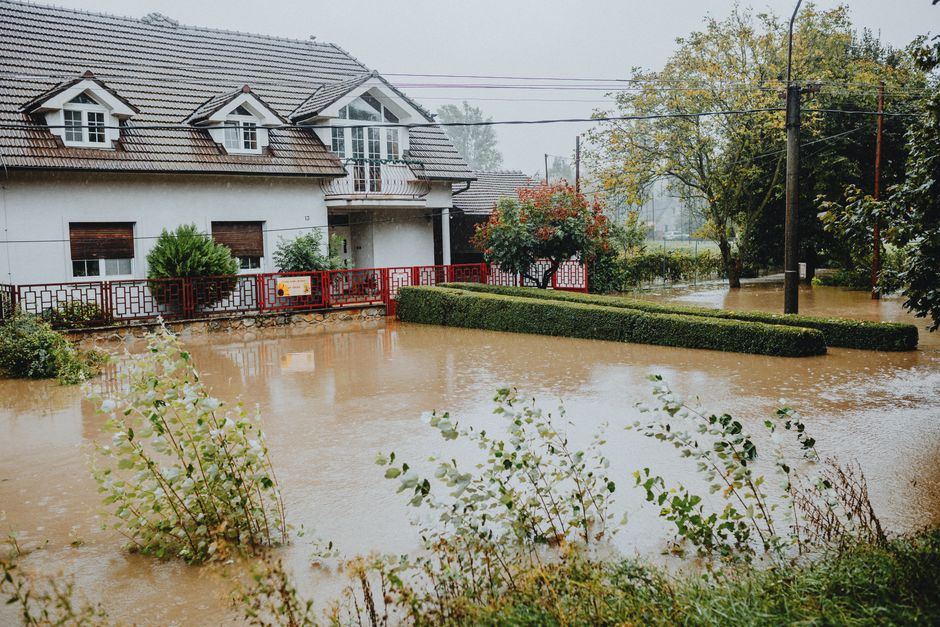
Sump pumps during active flooding test the station harder than almost any other home load. The pump may cycle four or five times per hour in a severe storm. Repeated inrush surges heat the inverter — some stations derate under sustained high-surge load. If basement flooding is a regular and serious risk, a dedicated 12 V DC battery backup sump pump eliminates the AC inverter entirely and removes every failure mode described above.
The same startup-surge problem drives sizing decisions for gas furnace backup — check peak watts first, Wh second.
Frequently asked questions
How do I find my station’s surge watt rating?
Look in the spec sheet, not the marketing copy. Search for “surge watts,” “peak watts,” or “max output.” If only continuous watts are listed, check the manufacturer’s product listing — “peak 4,000 W” often appears in the bullet points. A station whose documentation does not list a surge rating is a station you should not rely on for a pump without a real-world test first.
Does battery chemistry (LFP vs NMC) affect the surge test?
No. The surge rating is a function of the inverter circuit, not the cell chemistry. An LFP station and an NMC station with identical inverters perform identically on the surge test. Chemistry affects cycle life over years — LFP is rated for significantly more — but not whether the pump starts today.
What if I don’t know my pump’s HP?
A plug-in watt meter between the outlet and the pump cord reads actual running watts during a normal cycle. One test cycle before the storm gives you the real running wattage to use in the table above. It won’t catch a startup spike above the station’s surge rating — the station itself will trip on that — but it confirms the number to use for the Wh calculation.
Can I run other appliances at the same time as the pump?
During the 7-minute cycle the pump pulls 350–700 W depending on HP. Between cycles, draw drops to near zero. A phone charger or LED light in the gap is fine. Running a refrigerator or space heater at the same moment as pump startup risks tripping the inverter. The winter outage sizing guide covers how to stack multiple loads for a full overnight scenario.
Worth having before the storm
- Measure it: Plug-in watt meter — run a test cycle to confirm actual running watts and whether startup trips your station before you actually need it.
- The pump: 1/3 HP submersible sump pump — check the label for starting amps before ordering.